
The northern lights forecast for tonight looks a little livelier than usual. NOAA's Space Weather Prediction Center expects G1 (minor) geomagnetic storm conditions on November 17, 2026, with the strongest period forecast between 03:00 and 06:00 UTC. For North America that window falls late on Monday evening, November 16 (10 p.m. to 1 a.m. EST, 7 p.m. to 10 p.m. PST). In Europe it lands before dawn on Tuesday, between 4 and 7 a.m. CET.
According to the NOAA 3-day forecast issued at 12:30 UTC on November 15 and republished by SpaceWeatherLive, forecasters expect the Kp index to reach 5- in that block. Their reasoning is two-fold: a high-speed stream of solar wind from a coronal hole is turning toward Earth, and a coronal mass ejection (CME) that left the Sun on November 14 may arrive late in the period. Spaceweather.com also reports that NOAA forecasters predict minor G1-class storms around November 17–18 as the CME passes close to Earth.
Northern Lights Tonight: Where the Aurora May Be Visible
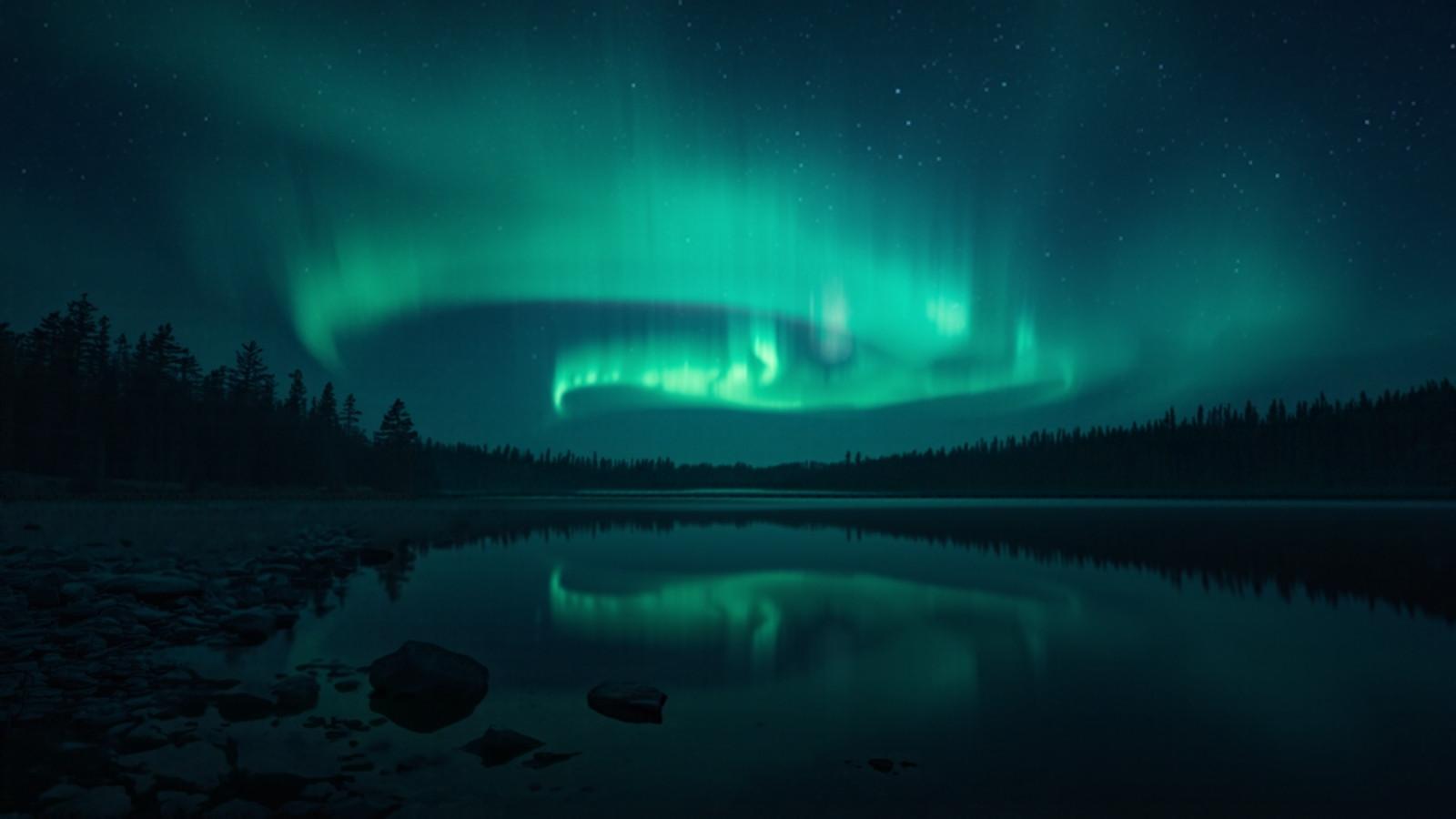
A G1 storm is the lowest level on NOAA's five-step geomagnetic scale, so this is a modest event, not a dramatic one. A Kp of 5 usually brings auroras overhead in Alaska, northern Canada, Iceland, northern Scandinavia and the north of Scotland. From the northern tier of the United States, such as Minnesota, Michigan's Upper Peninsula, North Dakota, Montana, Maine and Washington, a faint glow low on the northern horizon is possible if the storm reaches its forecast strength.
NOAA's own probabilities are cautious. For high latitudes they give a strong chance of storm conditions, while for mid-latitudes the chance of active conditions is around 30 to 40 percent and the chance of a minor storm only 15 to 25 percent over the next two days. CME arrival times are hard to pin down to the hour, so the display could come earlier, later, or not at all.
How to give yourself the best chance
- Get away from city light and find a clear view of the northern horizon.
- Wait for the Moon to set. The Moon is about 47 percent lit and reaches first quarter at 11:48 UTC on November 17, so it sets around midnight local time and leaves the rest of the night dark.
- Use your phone camera. A 3–10 second night-mode exposure often shows green and pink that the eye reads as a pale grey arc.
- Check a live aurora dashboard before heading out, since the real Kp can differ from the forecast.
A Busy Night Sky: Aurora Forecast Meets the Leonids
The timing is a pleasant coincidence. The Leonid meteor shower peaks on the night of November 17–18, so anyone heading out for meteors from a dark northern site has a second reason to keep glancing north. Our Leonid meteor shower 2026 guide has the best viewing hours. Before dawn, Mars and Jupiter are still close together in Leo after their meeting on November 16, covered in our Mars–Jupiter conjunction report.
What the Northern Lights Mean in Astrology This Week
Auroras are a solar-wind event, not a zodiac one, but astrologers often read the sky's mood alongside them. During the storm window the Moon is moving through Aquarius, the sign linked with electricity, sudden insight and community, and it stays there until 21:20 UTC on November 17 before entering Pisces. The Sun is in late Scorpio. Astrologers read this mix as a moment for clear-eyed honesty paired with a wish to share something bigger than yourself, which fits a night spent looking up with friends.
- Aries: The Aquarius Moon lights your 11th house of friends. A group chat about chasing the lights may turn into a real plan. Aries daily horoscope
- Taurus: Work ambitions feel public right now; save the late-night sky watch for when your to-do list is clear.
- Gemini: Your curiosity is high. Reading up on how auroras form suits your 9th-house Moon.
- Cancer: A quiet, private moment under a dark sky could help you let go of a worry.
- Leo: With the Moon opposite your sign, the best memories come from sharing the night with a partner or close friend. Leo daily horoscope
- Virgo: Plan practically: check the forecast, charge your phone, pack a warm layer.
- Libra: The Moon in your 5th house favours play and romance under the stars.
- Scorpio: Your birthday season continues. A night at home with the curtains open may suit you best. Scorpio daily horoscope
- Sagittarius: Short trips are favoured. A drive out of town to a dark spot feels right.
- Capricorn: Treat yourself to a good thermos and a warm coat; comfort is part of the plan.
- Aquarius: The Moon is in your sign. Your instincts about when to step outside are worth trusting tonight.
- Pisces: Rest first. The Moon reaches your sign on Tuesday evening, so a quiet night recharges you.
Frequently Asked Questions
Will the northern lights be visible tonight, November 16–17, 2026?
Possibly, mainly at high latitudes. NOAA forecasts a G1 minor storm with Kp 5- between 03:00 and 06:00 UTC on November 17. Alaska, Canada, Scandinavia, Iceland and northern Scotland have the best odds; the northern US may see a faint glow if the storm develops fully.
What time is the best aurora forecast window?
The strongest period in the NOAA forecast is 03:00–06:00 UTC on November 17. That is 10 p.m. to 1 a.m. EST on Monday night, or 4 to 7 a.m. CET on Tuesday morning.
What does a G1 geomagnetic storm mean?
G1 is the minor level on NOAA's G1–G5 scale, linked to a Kp index of 5. It can bring auroras to high latitudes and cause small fluctuations in power grids and satellites, but it poses no risk to people on the ground.
Can I see the aurora and the Leonid meteor shower on the same night?
Yes, from northern dark-sky sites. The Leonids peak on the night of November 17–18, and the Moon sets around midnight, so the hours before dawn are the darkest for both.
What does the aurora mean in astrology?
Astrology does not assign a fixed meaning to auroras, which are caused by solar wind. Astrologers do note the Moon's sign during such nights; this time it is Aquarius, read as a time for shared experiences and fresh perspective.
The northern lights forecast for November 17 points to a minor storm, so treat it as a pleasant chance rather than a promise. Check the live data after dark, look north from somewhere quiet, and see what the Sun sends. For more dates to watch, the cosmic calendar lists the full moon on November 24 and everything after it.