Flying freely
Effortless floating often reflects expanded autonomy, psychological relief, and hope for mastery—not a firm prediction of “success.”
Just a moment while we align the stars.
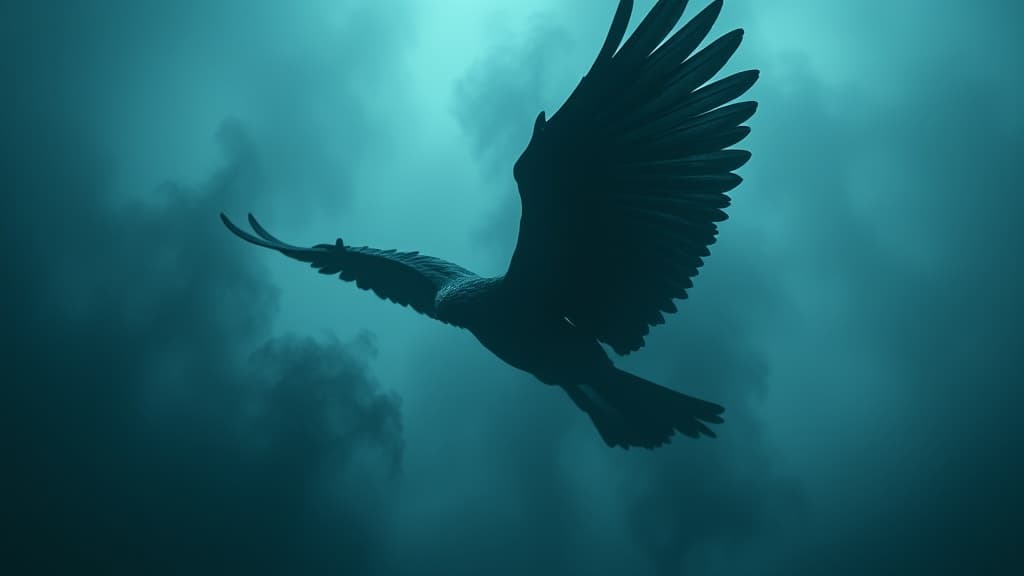
Wings can express protective fantasies, idealized care or the longing for a supporting authority in the ego.
From a dream-psychological and depth-psychological perspective (including work with dream material in the tradition of Freud and Jung, updated with affect- and attachment-based models), dream content is read today primarily as processed emotion and communication between conscious and unconscious parts — not as an oracle. Symbols are overdetermined: the same figure can carry entirely different layers depending on mood in the dream, life stage, and biography. The concrete scene — who you are, what you feel, what happened before in the dream — always matters more than isolated keywords.
Whether angel, bird or “own” wings: the motif combines autonomy with an additional, almost archaic resource - as if the self had access to a power beyond the everyday self. When read religiously or spiritually, one speaks of leadership; psychologically often of integrated hope or a maturing self-care. What is important is the quality of the wings (intact, growing, injured) and whether you fly alone or in a group; the social field of the dream modifies the interpretation considerably.
Flying fantasies are often associated in clinical dream literature with regulating self-efficacy, boundary-crossing, and transcending inner limits — especially when the waking self is strongly controlled or constrained. The quality of flight (easy, laborious, falling) often reflects the economy of your current adaptation stress: easy flight may point to successful affect integration, a slow climb to high demands with limited resources, falling to sudden loss-of-control fears or fear of hubris after visible success.
Combine “leadership” with everyday skills: fixed sleep times, reliable routines and a real reference partner do not replace mysticism, but they stabilize the self that carries such dreams.
If you want to deepen this reading, write down after waking in one or two sentences: the dominant affect (e.g. shame, anger, relief), the dramatic turning point, and a possible day residue (conflict, expectation, unspoken wish). That turns a general symbol into a personally workable hypothesis.
Effortless floating often reflects expanded autonomy, psychological relief, and hope for mastery—not a firm prediction of “success.”
Effort to advance indicates high demands with limited resources, tenacious ambivalence or internalized pressure to perform.
High altitude can mean vision, distance from everyday noise and increased expectations of yourself at the same time.
Flying low can signal down-to-earth caution, realistic risk assessment or – at the other extreme – fearful self-limitation.
Aborting the flight often represents fears of loss of control, impostor dynamics or sudden shattering of safety assumptions.
The sea marks the affective depths: broad feelings, the unconscious and the boundary between the manageable and the overwhelming.
Flow often forms process, irreversible time and the tension between going along and resisting.
The lake represents a relatively limited emotional space: introspection, reflection and often greater controllability than in the open sea.
Rain combines wetness, relief and sometimes melancholy - depending on the intensity and shelter.
The flood represents affect overflow, loss of control over boundaries or the penetration of the repressed into the surface.
The pool marks limited, often socially coded feeling: controllable depth, visibility and rules.
The figure rarely represents the real person, often for unclosed affects, identity-relevant learning processes or figures for comparison.